[00:00:00] Speaker A: Foreign.
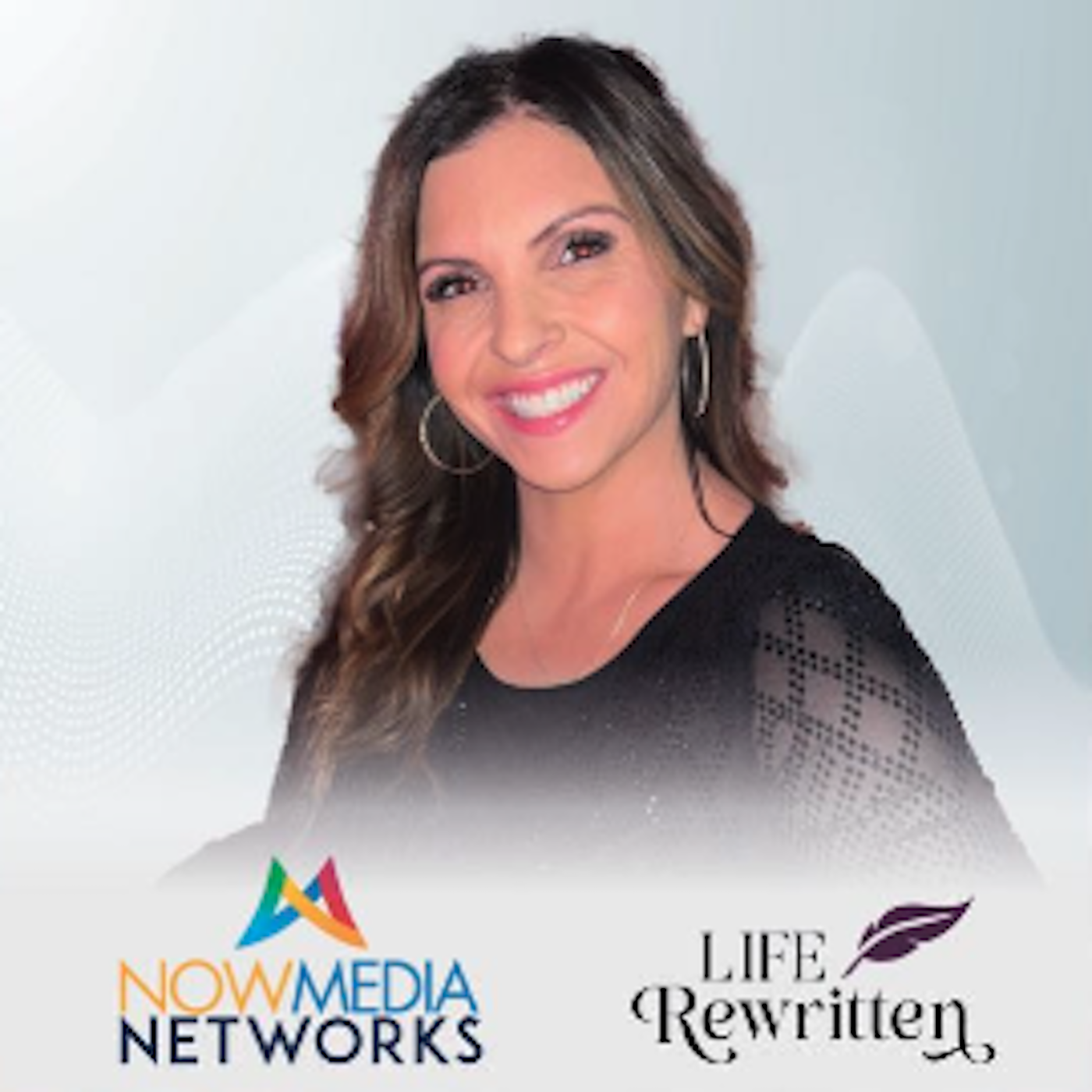
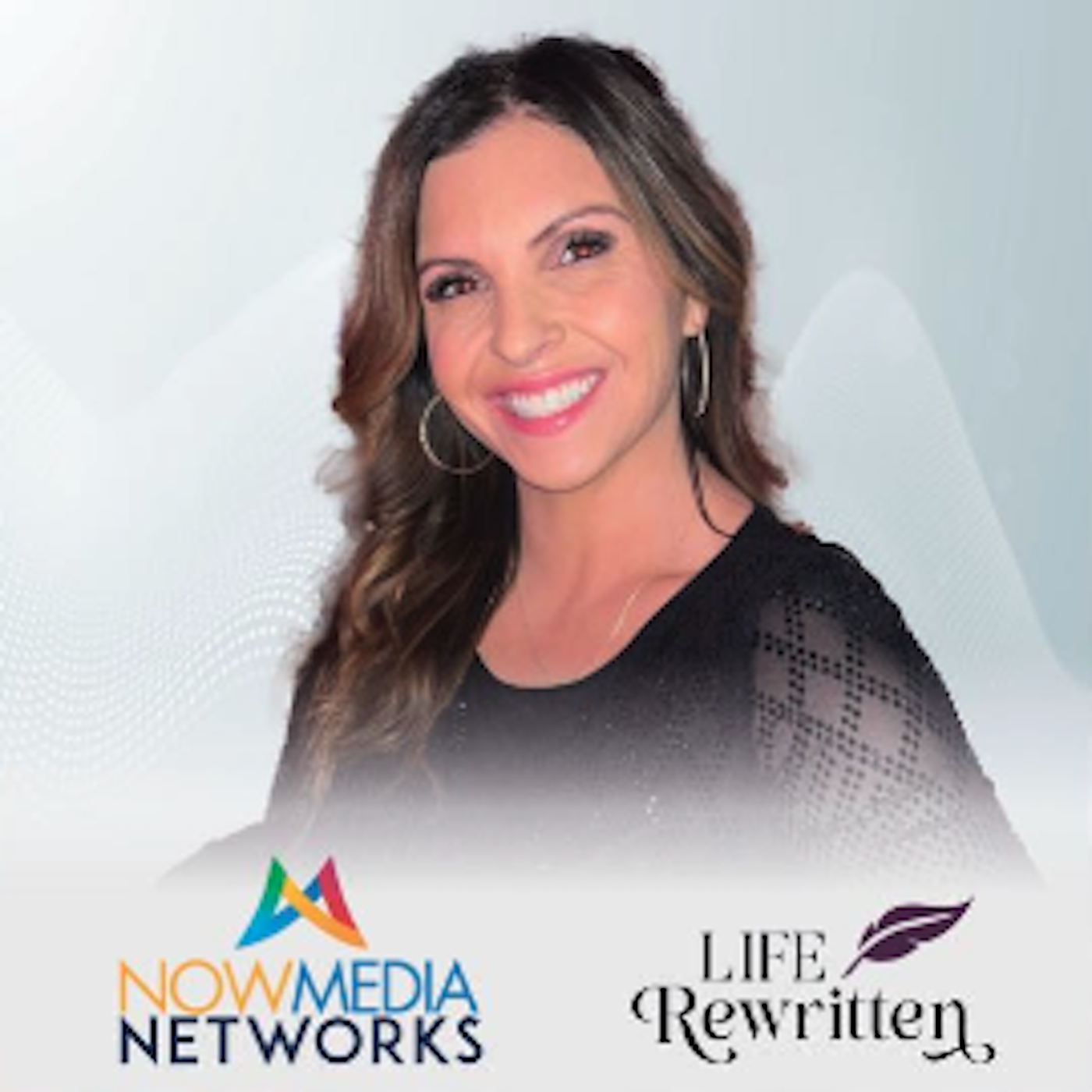
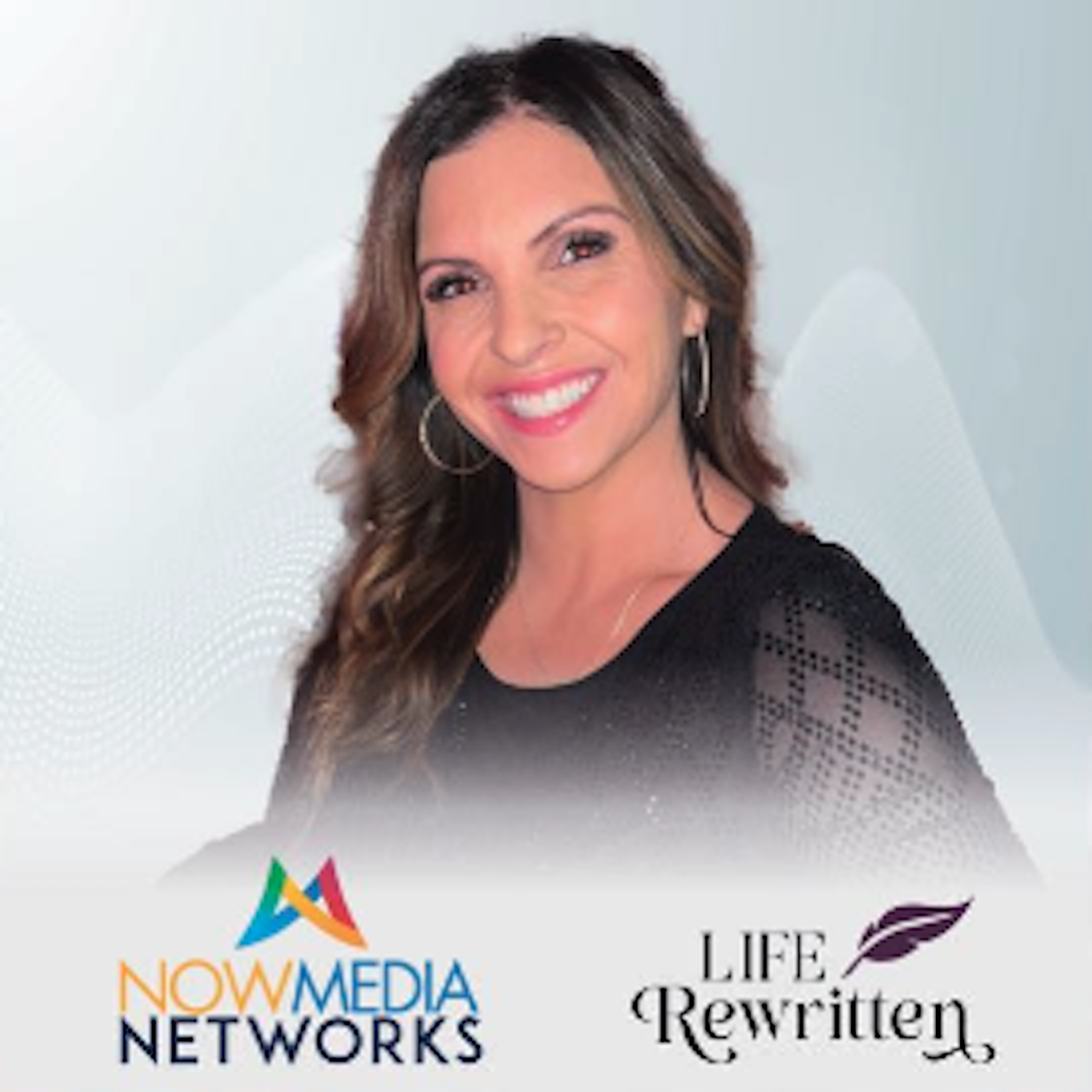
Welcome to Life Rewritten. I'm your host, Vanessa Lagoa. Today's episode is such an empowering story about transformation and the power of the mind. Our guest today, Brisa Alfaro, is a stroke survivor who ended up with Locked in syndrome where she was fully aware of what was going on around her. But unable to communicate with the outside world.
She was given a less than 1% chance of survival. But today she speaks on TED Talk stages.
She is an author, a speaker, and an incredibly inspiring woman.
She not only survived, but she is thriving and she's here today to share her story with us. Welcome, Brisa, and thank you for being here.
[00:00:57] Speaker B: Thank you so much for having me. I appreciate it. All the technical difficulties, but we're here. We are.
[00:01:06] Speaker A: Speaking of difficulties. Brisa, your story to me is absolutely one of the most powerful, impactful bits of proof that the power of the mind is so unbelievable.
You laid in a hospital bed after having the locked in syndrome brainstem stroke that truly nobody thought you would come out of.
Can you tell us what was life like prior to having this stroke?
[00:01:41] Speaker B: Yeah, well, you know, when things like this happen to people, no one ever thinks it would happen to them. Everyone thinks that it's for somebody else.
When I don't have time for.
Couldn't possibly happen to me because I've got XYZ happening and I don't have time for it. No one thinks that adversity can happen and strike them. And it usually happens when you are busy. And I was that. I was a New York City hairstylist. I was traveling in the beauty industry.
I helped my family at the. Our family restaurant. So I did the restaurant industry and the cosmetology industry as big as I could. And I traveled everywhere and was an educator in my industry. And I loved it.
I never thought that anything could really take me down as it did. And I had a rude awakening. One day.
I found myself in a New York City hospital with a less than 1% chance to survive.
And that's when I realized that I was no rare exception.
[00:02:56] Speaker A: Right. They do say that, you know, if you don't take the necessary breaks in life, the universe or God or whatever your higher power may be will. Will give you that break, unfortunately.
And so you were, you were young, you were 32 years old, which is uncommon for somebody to have a stroke.
[00:03:21] Speaker B: Yeah, that's the reason why I didn't know that it was happening. I didn't think like something like that could happen to me, much less the type of stroke I had.
So While I was.
I went to the hospital.
Luckily, I was in the hospital while it happened. I was in the hospital for a symptom that was unrelated to my stroke.
And I was very blessed that I was there when it happened.
And I still didn't understand that something like that could happen to me.
So while I was laying in the hospital bed, I remember seeing people come in and out of the. I was in the emergency room, and I still didn't understand why everyone was hurdled around my bed, because I could see other people coming in and out that were clearly worse than I was. At least I thought that, right? And I thought, why are they paying attention to me? Why are they asking me all these questions? Meanwhile, I'm answering them, but nobody's talking to. To me as if I was answering. Everybody was, you know, speaking to each other and asking, does she have any allergies? I would answer them, you know, asking all these personal questions about me, and I'm answering them. And sometimes the. The medical team couldn't answer them because they didn't know, but I would answer them and they would ignore me. And I thought, why are they not listening to me?
Well, it wasn't that they weren't listening to me. I just wasn't speaking because at that point, I had already had a stroke and I had already developed something called Locked In Syndrome.
What happens when someone has a stroke? Obviously it affects a certain side of their body. The left side or the right side? Mine happened in the middle, and it affected both sides. Where I developed Locked in Syndrome, that means that I was awake and aware, but I wasn't able to communicate. So things were coming in, but I couldn't express that they were coming in.
So it left me with the inability to speak, move, communicate. I was only able to open my eyes.
I wasn't able to breathe on my own. I had to have a tracheotomy. I wasn't able to eat on my own. I had to have a peg put in my stomach to be fed through a tube.
I didn't realize all of that came with Locked in Syndrome.
And I also didn't realize how rare it was. There were less than five cases at the time.
Five, Less than five cases per year worldwide.
And I still didn't understand that was what they said I was.
That was my life. I was starting to allow other people to write my life and deliver that information to my family without my consent, because I thought that I decide my entire life. I thought that I decide my outcomes. I decide how I want to live My life.
And now I'm listening to this doctors pronounce my fate and tell everybody what my future was going to look like or lack thereof.
And I thought, I thought, I decide.
And that's when I had to realize that it was up to me and no one else. So what was I about to do that could change the trajectory of my life?
And I knew that was up to no one else but me.
[00:07:21] Speaker A: Yeah, I mean that is, it's, I feel like we've all experienced that nightmare, like the, the actual nightmare where you wake up in the morning and you think, wow, I was in this dream and I just couldn't escape. And I. Nobody was listening or people were watching what I was doing, but they weren't hearing me or they weren't doing what I wanted. And you were living that reality.
It's, it's so powerful that you were able to acknowledge that.
Like, I'm here, I'm here and I want to make these decisions.
Now I've listened to your TED Talk, which is so powerful that I highly recommend everybody listen to.
And I am a huge mindset proponent. I coach a lot of people in mindset and I think that they're, it's such an undervalued tool.
[00:08:18] Speaker B: Yes.
[00:08:18] Speaker A: But you spoke about your mother sitting by your bedside non stop speaking to you. And you, you say in your TED Talk, you know, she was having one sided conversations. And it's almost, it's making me emotional because your mother continued to believe. And you said, my mother continued to believe even though there was no reason, there was no medical reason. The doctors were telling her, you know, it's, she's not going to come out of this. And she ignored them and she continued to speak.
Promise to you.
[00:08:57] Speaker B: Yeah.
[00:08:57] Speaker A: And I think that the power that your mother had in your success and recovery has to be noted.
[00:09:09] Speaker B: It does. And I, I give her so much of my recovery, so much credit for my recovery because there were times that I didn't know that I could do this on my own.
And my mom, I had to borrow her belief for a while until that belief seeped into me because she knew that I was going to recover. It didn't matter that I had a less than 1% chance. It didn't matter the odds. It didn't matter what the doctors kept telling her. She knew that I could do it.
So that conviction that she was carrying, I eventually had to adopt it and I carried it with me through my recovery. So sometimes we're going to have to do that in life. Right? Sometimes things are going to get difficult for us. And sometimes the. The odds feel so heavy and we. We start to ruminate thinking, how are we ever going to get past this? But that's when we start to borrow other people's belief. And, and sometimes their belief is what we need. You know, they believe that we can do it, and sometimes we just have to latch onto that so we can show ourselves. Yeah, you're right. We can do this. I think it's very important that, that we realize that it's important the company that you keep, right?
Because just in the same way you can believe the negative and, and that can seep into you. So you have to decide, what is it that you want to believe in? What do you want to happen?
And latch onto that. Because if there. If you are around a bunch of negative people, a lot of people that don't believe in you, don't believe in your dreams, and you start to become that. You start to believe their limitations on you.
And it's important for you to see that what you believe in for yourself, you can actually manifest it if you don't stop.
And I realized that that moment that it started to become weak, where my belief started to.
To retract a bit, My mom kind of filled in that gap.
And as a result of that, I mean, no one thought that it was going to happen. Everybody kept coming in the room saying, ma', am, I know you want to believe it.
Even when I had small movements, I mean, the tiniest movement, my mom would say, she's moving, she's moving. She's moving on her own. They would come in and say, ma', am, I know you want to believe it, but those movements are involuntary.
And as a mother, I'm sure that was really hard for her to hear, but it was incredible to hear her respond back to them. No, she's doing it on command. You need to go check her. And it actually checked me to make me realize, like, she believes in me so much. Why don't I believe in me that much?
So that energy that I kept, you know, going and would retract back when I would hear them say, she's not doing it, it would. It would kind of come back. That energy would come back and say, no, I am doing it. Come check me. I'm good, I'm good. So they would check me. And then finally one day, I was able to make that connection and make my movements noticed because they were now happening on command. And that's what I needed then to see that it was happening on command. And it wasn't by accident.
It wasn't by chance or, or. Or just luck.
I was doing it on purpose.
And sometimes we need the universe, the world, the. Our friends, our family, everyone that's watching us, we need them to realize that we're not by chance. We're on purpose. This is happening on purpose, and we're doing something to make the change.
And that's when my recovery started, when they were able to see that I was able to make a command, make a move on command, and I was able to make my pinky move.
Now, I didn't get up and walk out of the hospital right away. It happened with a pinky move. I made the pinky move happen. And after that, it became a recovery. And I uncovered more and more and more.
First, I was able to move my hand and my arm. Later, I was able to sit up in a wheelchair and walk with a walker and later with a cane. Eventually, I was walking unassisted. But all of those were micro victories and micro pinky moves that I was able to do and celebrate with my family. But I'll tell you, Vanessa, every single time I came back to see my doctors, they would always tell me, this is incredible, but this is as good as it's going to get.
[00:14:40] Speaker A: But it wasn't.
[00:14:41] Speaker B: It wasn't.
[00:14:43] Speaker A: And we are going to go to a commercial break, and when we come back, I want to hear all the rest of the. Exactly how you defied all of the medical advice that you were given. So stay tuned. And we'll be right back.
We'll be right back with more stories of resilience and renewal. This is Life Rewritten on NOW Media Television.
And we're back. I'm Vanessa Lagoa, and you're watching Life Rewritten on NOW Media Television.
Welcome back to Life Rewritten. If you want more of what you're watching, stay connected to Life Rewritten and every NOW Media TV favorite live or on demand, anytime you like, Download the free Now Media TV app on Roku or iOS and unlock nonstop bilingual programming in both English and Spanish. You can also listen to the podcast version right from our website at www.nowmedia.tv. from business and news to lifestyle, culture and beyond, Now Media TV is streaming around the clock. Ready whenever you are.
We are here with Brisa Alfaro, who is just an incredibly powerful woman who suffered from a brainstem stroke that left her trapped in her body.
Her mind was with it. She could hear everything going on around her. And Brisa, you shared with us in the first segment all about kind of leading up until the day of your stroke and then the beginning stages of being in the hospital and hearing the doctors speaking about how you had less than a 1% chance of survival.
We talked about your mother being by your side and speaking motivation and hope into you.
So we finished the last segment with you telling us a little bit about how you would start making these small moves, and you've gone on to create what is known as pinky moves. The movement. And so tell us about that first moment when you were able to make motion.
[00:16:47] Speaker B: Yeah. So, as you know, that was my pinky move. And I.
I think so. I heard once what gets celebrated gets repeated.
And I'm hearing a little bit of an echo, so that's a good sign. It gets repeated.
So I realized that if I'm going to make this full recovery and, you know, everybody got to see my pinky move. So that gave me a chance to make everyone realize that I am trying. And don't write me off. I am trying. I'm making a difference.
And sometimes that's what we need, just that little bit of evidence that we are trying, but we have to build on that.
And I realized I needed to make pinky move progress in my recovery and in my life in general.
And the way that I was able to do that was by celebrating every little micro victory.
So, well, I was recovering. My pinky move, yes, was my first one. And then little by little, it started. I started uncovering more and unlocking more of my recovery of my body and my mind, and I started to see that evidence play out in my life. So as a result of that, I didn't realize I was inspiring other people to do the same in their lives and to start noticing the little victories that they're doing in their lives so that they can expand on that. And you do that by celebrating the things that you're doing right now. Many times we look at it like we want all the big things right away, but if we don't stop to celebrate those little things, you can't get to those big things because all of those little moments compound to get us to where we want to go.
And like I said, I wanted to get up and walk out of the hospital. And so many times we want to get up and get to our goals right away, but we can't do that without making those little pinky move progress goals, crossing them off and getting there. So that's why I talk about pinky move progress all the time.
And I started to celebrate every little thing that I got to uncover, and it was like uncovering presents, like wrapped in sandpaper, basically. And sometimes we need to see it that way because it does suck. And I think we all want it to be just rainbows and butterflies, but it's not going to be like that. And we have to accept that and just move forward. Right.
And that's basically what I had to do throughout my whole recovery. And that's got me to where I am now and, and where I'm going, like next.
My TedX. I was able to share it on the doctor's TV show. I wrote a book that became an international number one bestsel.
I've been able to speak on stages all over the world. And that all happened through small progress, small thinking moves.
[00:20:24] Speaker A: And it's. It's wild to think that we often forget that sometimes when we're facing the hardest parts of our lives, we can never imagine that those really difficult days and difficult times really can end up being the greatest blessings in our lives.
And I would imagine that as you laid there trapped in your body, you never could have envisioned early on at least how you would be of such service to other people and how you would inspire and motivate and lead and guide people. Because I cannot, I truly cannot think of a more inspirational story of transformation.
I really can't. And the fact that you did not only overcome medically, but you shifted your entire mindset and have now dedicated your life to serving others and helping others and educating others.
That is true transformation.
[00:21:31] Speaker B: Thank you. A lot of it stems from the transformation that I received from the very beginning. I mean, when I was locked in my body, I remember listening to the words. My mom used to play audiobooks for me and she played the Secret.
And the Secret focuses on the law of Attraction. And in during that time, I remember hearing the voice of Lisa Nichols and she said, the first step is to ask, make a command to the universe, because the universe responds to your thoughts.
Thoughts were all I had.
So if all I had to do was change my thoughts and change my life, then that's what I was going to do. I cleaned up my thoughts and only thought of what I wanted versus what was the current reality. I think a lot of us get caught up in like all of the life and how the things that might happen and how difficult it's going to be.
What about you? Change your thoughts about.
Think of exactly what you want and start living that. Start celebrating it as if it's already happened and you'll be surprised.
Absolutely. I mean, I talk to my clients about that. I've. Visualization is such a powerful thing. Basically, the way I recovered, I played that movie in my mind. I was already recovered in my mind before I actually was.
Right. I lived it. So when I became it, I didn't even realize that they overlapped because I was already recovered in my mind. I was already living the life that I expected.
I am living it now. And the things that I aspire to become in the future, I'm already living it. I'm already embodying it. I know it's going to happen because it's already happening in my mind. And I think if more of us start to.
And start to visualize the life that we want it, it's not even about creating it, we just become it. Yes.
[00:23:40] Speaker A: And there's so much of that that's not just about seeing it, but feeling it and feeling how it's going to feel, how it's going to look, how it's going to sound, and who's going to be around you. And you said earlier, you know, the company that you keep is so important.
We've all seen the, the visual of, you know, apples. And a healthy apple is close to a rotting apple. And what happens is the rot spreads. But the opposite is true. And I think it's so powerful.
Your mother playing you the secret. I mean, how phenomenal is that? And, and you're, as you said, all you had at that time were your thoughts. But the fact that you use those thoughts to your advantage is, in my belief, exactly why you are where you are today.
[00:24:31] Speaker B: Oh, thank you. I appreciate that. I, I didn't realize it at the time.
I do now because I've done the work and I'm, I'm learning about all of it and the amazing, you know, creation of neuroplasticity and how amazing it is and how you can literally rewrite things.
Your life, and you can change your life just by your thoughts alone.
And I mean, if you can change your life just with your thoughts in a positive perspective, you can also do it in the negative. So why not focus on the positive? Why not change your life for the good? Why not change it to how you want it to look like? Play that movie in your mind. What is it that you want? Focus on that and then just go after it. Make those pinky moves and, and start to uncover what it is that how. How you want to live your life. The things that you want can absolutely happen for you if you don't stop, if you keep making those pinky move, if you celebrate those pinky move progress moments in your life and you just keep going.
I think many times we need to start to notice and celebrate all of the small micro victories that we're doing today that will get us to our next goals.
[00:26:05] Speaker A: We're going to go to commercial. When we come back, we're going to talk exactly about what your goals were and how you are now achieving them as a speaker and author and truly just somebody who gives back in this world. So stay tuned and we'll be right back.
We'll be right back with more stories of resilience and renewal. This is Life Rewritten on NOW Media Television.
And we're back. I'm Vanessa Lagoa and you're watching Life Rewritten on NOW Media Television.
Welcome back. I'm your host, Vanessa Lagoa. Today we're here with Brisa Alfaro who is telling us about her journey as a stroke survivor. And now we're going to get into where Brisa is today. So, Brisa, you have authored a best selling book and I think even more importantly, you go and you reach medical professionals and you share your story with them, not only to give them insight from a survivor standpoint, but for them to be able to go into the fields and I would imagine keep your story right in the back of their mind when they're dealing with patients who also have locked in syndrome. So can you tell us a little bit about, about how you got started with speaking and writing?
[00:27:24] Speaker B: Yeah. So at first I honestly did not think that something like that was for me. I didn't think that I could ever be a speaker, a writer or anybody like that. Because telling my story and reliving my story I thought would be too difficult for me. But if I could do that, then I could do this right. And there were many times where I felt stuck just in that alone. And I, I would talk to my dad and my dad would always tell me something that I also put in my book. You have to have ganas. He would always talk about ganas, which is the name of a chapter in my book, which means the will. I had the will to live back then.
Now I have to have the will to be able to share my story. If I do want to impact lives lives, if I do want to change the narrative for people that are struggling to make a difference and that are also stuck in their lives, maybe they might not have locked in syndrome, but many times people do feel locked in their life and their circumstances.
And if I have the power to help them see a moment can change everything.
Just changing their thoughts can change their life.
Then I have to give myself the will to go out there and go do that. So that's what I've dedicated my life to now.
Making a difference in not just stroke survivors lives or people that are entrepreneurs or doctors and medical professionals. And I get to share my story on different stages. And it always surprises me how my story helps other people that have nothing to do with stroke recovery.
And it surprises me to see how it all comes full circle. And I wasn't the only one that felt stuck. So many people deal with feeling stuck in their lives. It could be a single parent, it could be a mom dealing, dealing with her family and life.
And it could be someone trying to retire, someone that is retired, someone that's going through a medical condition or anything. It's been surprising to me how many people have come to me and asked me to speak on their stage or coach with me or just have a conversation with me and see how pinky moves really does impact their lives. And if I could be a voice to someone going through it, that's what I'm gonna do. And I'm never gonna stop. It's some. It's become my passion and I hope that people can reach out to me and I can help their community and their audiences or them themselves. So hopefully you could reach out to
[email protected] or pinkymoves.com and or find me on social media. Breeze Elfaro and I think it's so.
[00:30:43] Speaker A: I mean, you really defy being stuck when you talk about your situation. I mean, you were physically stuck, but you're, you're so correct that people find themselves stuck all the time. And you and I have spoken before about, you know, in my coaching and motivating people, what I tell them is that, you know, in, in the recovery world, this too shall pass. That's a common phrase and I had heard it a million times, but I never quite knew how to apply what this too shall pass means. And it's really understood that, that what that really just means is how I'm feeling right now doesn't have to be forever. And feelings are meant to be felt, not kept. And you can feel them and experience them and then sort of learn from them and let them go and move on.
And you've done exactly that. You have. I am sure that there were days that you did not feel like going on and there were days that you didn't want to do any pinky moves. You didn't want to Put yourself through, I'm sure, the rehabilitation that you had to go through and all the learning to. To walk, to talk, to eat, to breathe on your own again.
But you did. And you are such a powerful.
You are a powerful message to this, to anyone stuck. And. And I. And I would imagine that there are times that people are whining or complaining to you about things that they feel stuck about, and you must just want to say, oh, my goodness, like, if I could do what I did, you can do it. You can get through this.
[00:32:17] Speaker B: Yeah, I do. I do have moments like that. But I also know everybody's. Everybody's stuck is a little different. Right. And it's hard sometimes when you're in the thick of it. I get it. So give yourself grace and then give yourself a pinky move and just keep going.
[00:32:35] Speaker A: How has the word limitless been built into your.
Call it personal brand?
[00:32:45] Speaker B: So I realize small moves equals big results.
So when you keep making small moves, there is no limit. There is no cap.
One small move leads to another small move leads to a big move. And if you keep going, you uncover more and more and more. And to me, that's limitless. There is no cap.
And I believe that that's for all of us. It's not just for some people. It's for all of us.
[00:33:20] Speaker A: It's that power of the mind, and it's. It's the rewriting your story completely.
What we talk a lot about here. And, you know, the chapter of your life that once existed does not have to be the chapter that continues, you know, right. Points in our lives where we. We put a chapter to rest and we start a new one. And in your, you know, messaging and in your speaking to other survivors, you're able to give them that strength and that hope and that determination.
Do you ever visit hospitals or visit with stroke survivors?
[00:33:59] Speaker B: I do. I do. I. And many times I get to share.
I get to share my story, but I also get to share that they can rewrite their story.
I think that that's what is the most impactful. When I go to different hospitals and rehab facilities and medical conferences, when I do get to share my story, because it is not just for the survivor. It is also for the medical professional to be able to come back and share that with their patients and let them know they can rewrite their story, too. This is not. This doesn't have to be the end all, be all. And if I can inspire them, then I can inspire more of who they work with and who they get to see. And who they get to help. And maybe my story will help people that I don't even know exist, you know, so that's been. It's been an incredible journey to be able to. To reach out to those that need my help, so.
[00:35:02] Speaker A: Right. And again, I mean, I just, I can't help but go back and just imagine you laying there in the hospital early on, ever having imagined that you'd have the impacts that you have today.
[00:35:16] Speaker B: And who would have thought? I know, it's crazy. I'm, I'm very blessed. I feel very grateful for the organizations that reach out to me and, and want me to share my story on their platforms and with their audience and their people. And I'm just very grateful. So.
[00:35:37] Speaker A: Well, we're going to go to our last commercial break, and then in our last segment, we're going to talk a little bit more about how people can book with you, how can they get you to come speak at their hospital, how can you speak on stages to, you know, inspire anyone? Because everybody gets stuck, as you've said. So stay tuned. And we'll be right back with Barisa Alfaro.
We'll be right back with more stories of resilience and renewal. This is Life Rewritten on NOW Media Television.
And we're back. I'm Vanessa Lagoa and you're watching Life Rewritten on NOW Media Television.
Welcome back to Life Rewritten. Don't miss a second of this show or any of your NOW Media TV favorites. Streaming live and on demand whenever and wherever you want. Grab the free Now Media TV app on Roku or iOS and enjoy instant access to our bilingual lineup in English and Spanish. Prefer podcasts. Listen to Life Rewritten anytime on the Now Media TV website at www.nowmedia.tv. from wellness and transformation to business and innovation, Now Media TV is here 24 7, bringing you the stories that move you.
We are back and wrapping it up with Brisa Alfaro. Brisa, this has been truly one of the most exceptional conversations that I've had in a long time. And I said it time and again. You are so inspirational, and I think that your pinky moves are truly changing the world.
[00:37:08] Speaker B: Thank you.
[00:37:09] Speaker A: Our guests would like to get in touch with you either to have you come and speak, speak to their groups, speak on stages, read your books. What is the best way for them to get a hold of you and learn a little bit more.
[00:37:22] Speaker B: You can go to my website. You can go. It's easy to remember. Pinkymoves.com you can go to my website or you could just follow me on social media, Brisal Faro on all social media and just reach out to me, send me a message and we'll see how we can work together. So, yeah.
[00:37:41] Speaker A: Awesome. So what would be a small piece of advice that you would give somebody right now, today that might be listening that's feeling stuck.
[00:37:53] Speaker B: I think that it's my, my go to is always small moves equals big results.
When I, when I talk about small moves, there are a few key things that you, I think people need to realize as long as you believe that it's possible. So one have belief and then what you talked about earlier, visualization is huge. Act as if you already have it and then combine those two with consistent micro action and you'll be surprised on what those three things can you can accomplish with those three things. Then it's just rinse and repeat, notice what you're doing and start celebrating those micro victories and rinse and repeat. Just keep doing that over and over again. That's the best advice I could give someone. Just notice what you're doing. Right. And keep doing it. Yeah.
[00:38:57] Speaker A: And I think a lot of that is getting into check what you're thinking. I mean, you and I would agree that the brain believes whatever you tell it. So if you're feeding it garbage, right? The diet, if you're feeding your body garbage, your, your body is going to show that your inside, right.
It's the same thing. What we ingest is not just what we eat. It's what we listen to and who we listen to and the situations we put ourselves in. So I think, you know, for me, what I'm going to take from this today is those pinky moves, those little micro movements that you're talking about, whether it be a morning routine or an evening routine or physically moving my body or choosing things that better my life, right?
[00:39:46] Speaker B: Like watching this show. That's a big pinky move. I mean, being able to surround yourself. Even if you don't have the people around you that you need, you can still choose to surround yourself, surround yourself with positivity. And this show is example of that. You could just like watch the show, watch other shows, what, read other books, surround yourself with who you want to become and it's gonna happen. You will become a mirror of that. But, but you have to be careful.
It's, it's so true.
[00:40:23] Speaker A: Your energy, you know, I, I feel like we hear people all the time saying things like, oh, social media is the devil. Or you know, personally, I don't watch the news Often, and it's because I can tend to get sucked into the negativity. But I like to follow any of my social media following. You know, people that I follow tend to be people who are highly motivating and inspirational and people who I either admire or strive to be more alike. And I think that that is a pinky move.
[00:40:58] Speaker B: Yeah, that's huge.
And just like example, what you're talking about, your social media, your social media will just give you more of what you're already looking for. So your life.
[00:41:11] Speaker A: Wrong.
[00:41:12] Speaker B: Your life is the same way. So what is it that you're looking for? Because if you're constantly looking at cat videos, you're going to receive a bunch of cat videos.
So what is put out there in the universe, what it is that you're looking for? It's the same way you receive what you put out. So what are you looking for? Put that out there. If you're constantly seeing positive energy and you're seeing what Vanessa's up to and it's positive and it's good, you're going to receive more of that algorithm.
That's what you want to do. Put out in the world what you want to receive. It's going to come back to you and then go make pinky moves in that direction.
[00:41:56] Speaker A: Absolutely. It's the.
[00:41:58] Speaker B: It's.
[00:41:58] Speaker A: It comes down to the basic laws, the law of assumption, the law of reciprocity, the law of attraction. And.
And, you know, we all know those people who are so negative. And, you know, it's like, oh, my tire was flat, and then the dog was, you know, sprayed by a skunk, which happened in my home last night. And I'm stressed about it because, you know what it's like, you just kind of learn to shrug off. Like, these are the pieces of life that, you know, you can either wallow in and you can become a victim to, or you can just sort of roll with it and continue those moves in a positive light.
I ask all of my guests this, and I'm dying to know, what is the next chapter of your life going to be titled?
[00:42:47] Speaker B: Oh, that is such a great question.
There's so many. There's so. There's so many ways it could go.
The.
The pinky moves has always been my. My thing. But the result of pinky moves has been what I've been uncovering. So uncovering my next is. Has been very important to me. So I think that would be the title is just Uncovering My Next.
I think that's what a lot of people are in the, in the motion to do. Everybody wants to know what is going to, what they're going to uncover, what is their next going to look like. And I think that that would be the next title of my book, Uncovering My Necks.
[00:43:39] Speaker A: I, I was just going to say, I, I feel another book coming up, Eisen, and I think that, you know, that I think a big part I can see for you is to dive a little bit deeper into all those, those laws that we spoke about. Because I think that when you sit back and look at pinky moves, that is really what sort of began it all was your, I mean, your mother playing the Secret for you is so incredible. And I don't like to think about the what ifs in a negative.
But I just want to take a minute just to consider if your mother had sat by your bedside and spoken all doubt into you, if you would be today where you are, I don't think I would.
And you said in your TED Talk, and it was, it was powerful. And we spoke a little bit about it earlier about borrowing other people's belief.
And I think that people can watch you and they can borrow your belief.
And if they're not feeling strong or determined or powerful or ready, maybe hearing your story will be exactly what they needed. Maybe it will be enough for them to make that one micro move today or tomorrow that can really uncover the rest of their lives.
[00:45:06] Speaker B: That's, that's my hope. That's my hope. I really want to unlock people's potential and have them see what I see, put a mirror in front of them and, and see their unlimited potential.
As long as you keep going, there is no limit.
You can get everything that you want in life as long as you keep going.
[00:45:33] Speaker A: I do believe that. I do believe that. I do believe that you are a product of your thoughts and your beliefs. And I do believe that Barisa, your story will reach so many people and breathe hope into them and inspire them. And I genuinely want to thank you for taking the time to be here with us to share your story, to continue to speak and meet with people who really need to borrow your belief right now. So thank you for being here.
[00:46:03] Speaker B: Thank you for having me. It's been such an honor.
[00:46:07] Speaker A: Thank you.
Stay tuned for more shows and we'll see you next time on Life Rewritten. And I'm your host, Vanessa Goa signing out.
[00:46:15] Speaker B: Thank you.